Mobile Home Skirting Compared: Vinyl, Metal, Faux Stone and Wood
This post may contain affiliate links. If you buy through them we may earn a small commission at no extra cost to you. Learn more.
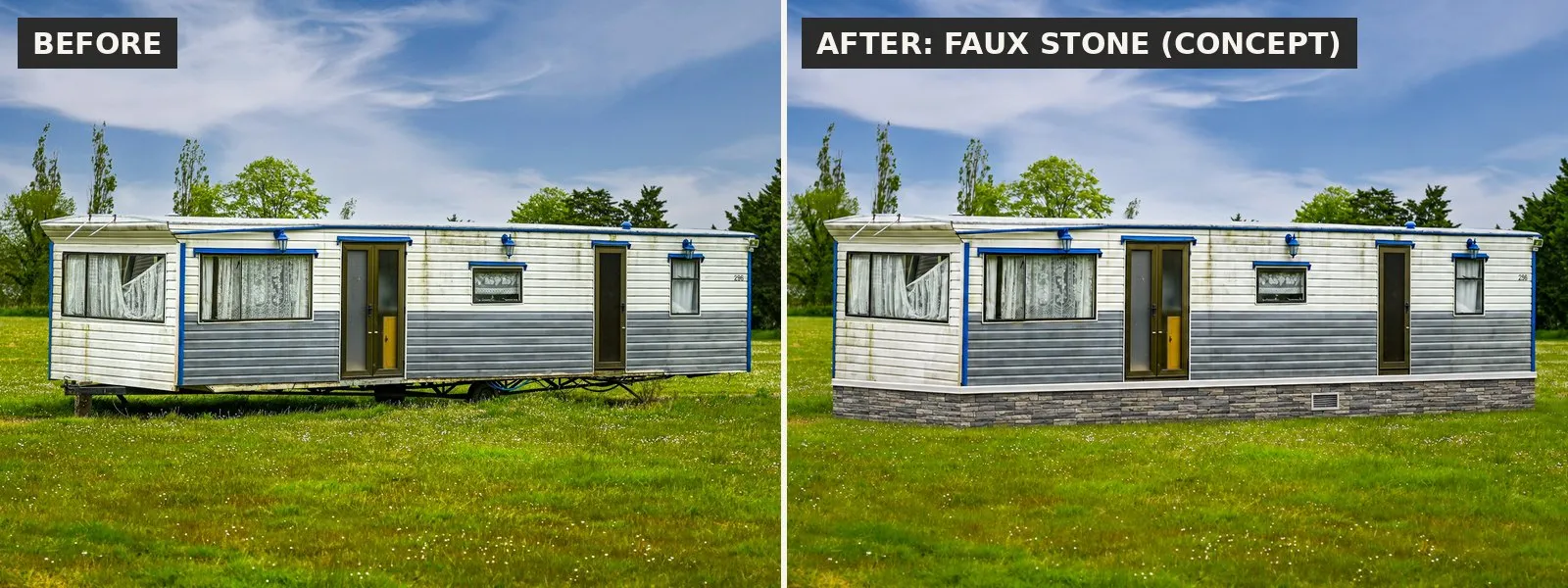
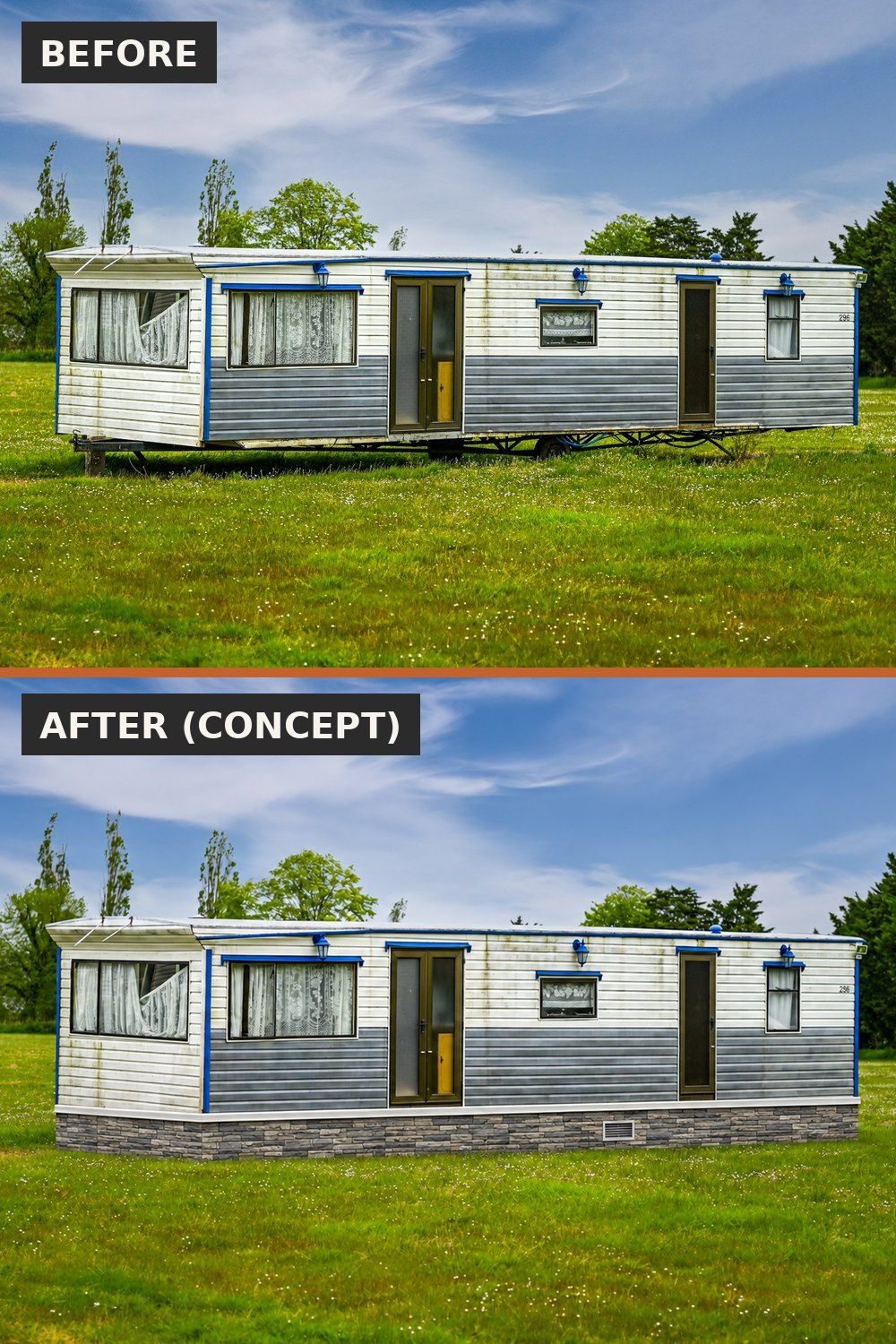
Skirting is the band of panels that closes the gap between your mobile home and the ground, and it works harder than it looks. It keeps wind off your pipes, keeps animals out of the crawlspace, and makes a single wide look settled instead of parked. The material you choose decides how well it does those jobs and for how long. Below, we compare vinyl, metal, faux stone, wood and concrete block on cost, durability and climate, using real installed-price ranges, so you choose once and don’t redo it in three years.
What skirting actually does (and what the rules say)
Think of skirting as the wall of your crawlspace. Without it, cold air moves freely under the floor, the belly insulation takes a beating, and water lines freeze first in a cold snap. Raccoons, cats and rodents also treat an open crawlspace as free housing.
Skirting is not just decoration, though, and federal installation standards for manufactured homes (24 CFR 3285) set a few rules worth knowing before you buy anything:
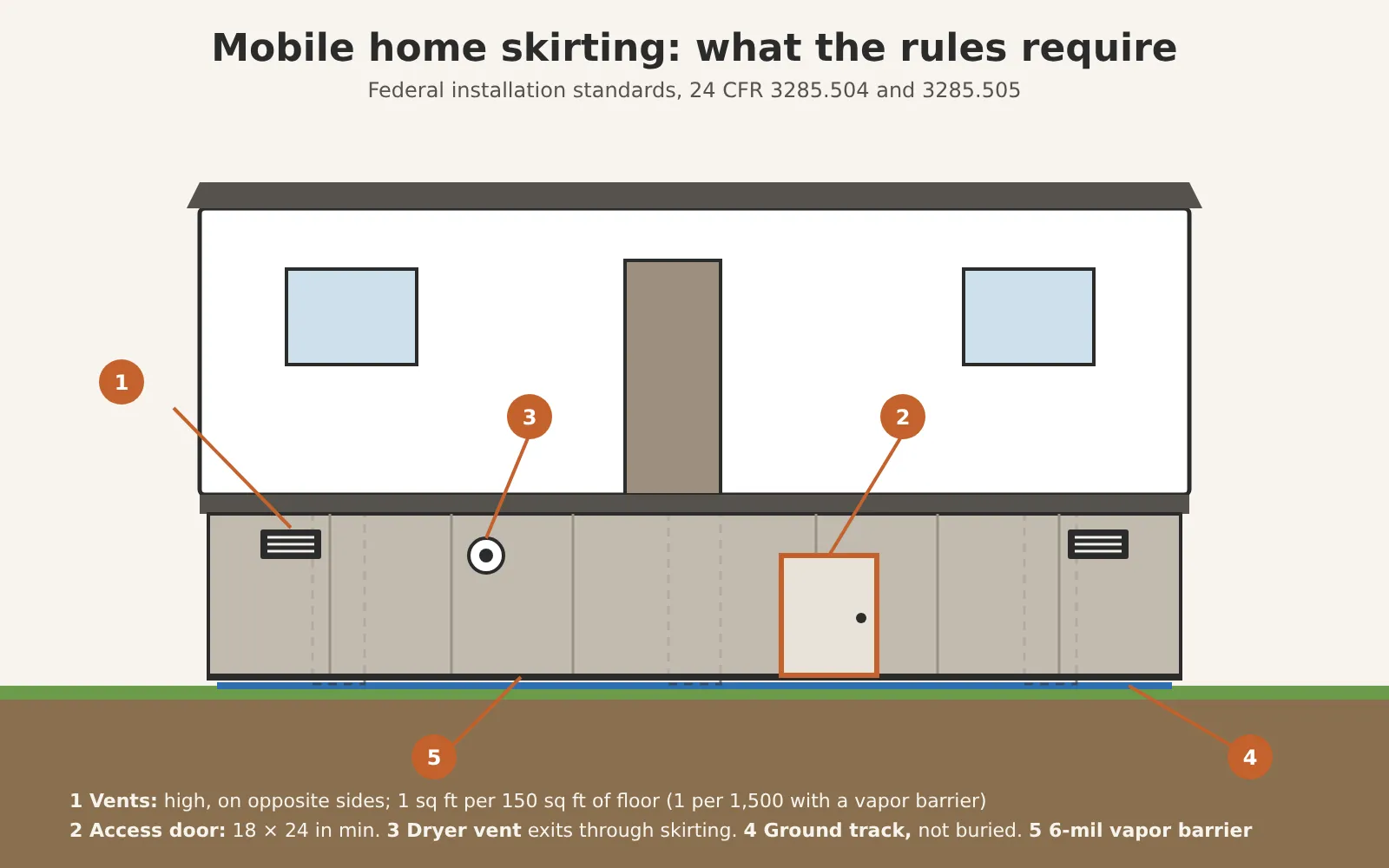
- Ventilation is required. A skirted crawlspace needs at least 1 square foot of net vent area for every 150 square feet of floor. Lay a 6-mil plastic vapor retarder over the ground under the home and that drops to 1 square foot per 1,500 square feet (24 CFR 3285.505).
- Vents go on opposite sides, set as high as practical. That creates cross-ventilation. Vent covers must keep rodents out, and in freezing climates they must be adjustable so you can close them in winter.
- You need an access door at least 18 inches wide, 24 inches tall and 3 square feet in area, placed so you can reach the utility connections.
- Dryer vents and combustion air inlets must pass through the skirting to the outside, never dump into the crawlspace.
- Wood within 6 inches of the ground must be pressure-treated for ground contact, or be a naturally rot- and termite-resistant species.
- Skirting can’t trap water behind the siding or be fastened in a way that stops the siding from expanding and contracting.
Your state, county or park may add rules on top of these, so check before you order.
The materials, side by side
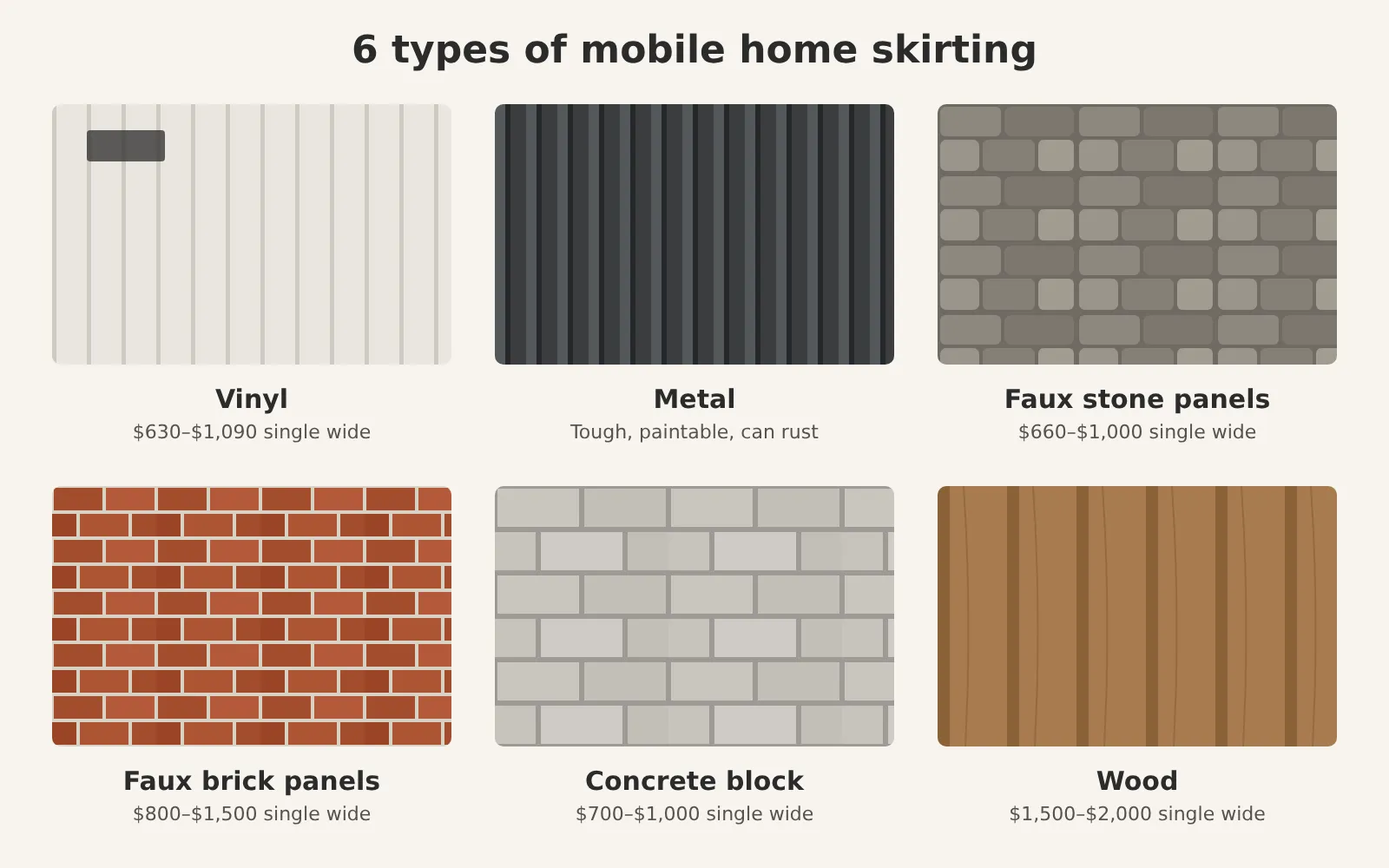
Here is what each option typically costs installed, based on HomeAdvisor’s survey data. A standard single wide needs about 150 linear feet of skirting.
| Material | Single wide, installed | Double wide, installed | Best for |
|---|---|---|---|
| Vinyl | $630 to $1,090 | $1,100 to $1,550 | Tight budgets, mild climates |
| Faux stone panels | $660 to $1,000 | $920 to $1,350 | Curb appeal on a budget, windy areas |
| Brick or concrete block | $700 to $1,000 | $1,400 to $2,000 | Permanent setups you’ll never move |
| Faux brick panels | $800 to $1,500 | $1,200 to $1,980 | A classic look without masonry |
| Insulated vinyl | $1,440 to $4,000 | $1,760 to $4,480 | Cold winters, freezing pipes |
| Wood (timber) | $1,500 to $2,000 | $3,000 to $4,000 | Custom looks, if you’ll maintain it |
Labor is roughly 60% of a pro install, and most homes get done in a day. If you DIY, plan on a few weekends instead.
Vinyl
Vinyl is the default for a reason: it’s the cheapest, it’s light, and the panels slide into a track at the top and bottom, which makes it the friendliest for DIY. The trade-offs are real, though. Standard vinyl gets brittle in hard cold, cracks when a weed trimmer catches it, and doesn’t hold up well in storms and high winds. It also adds almost nothing in insulation. Choose vented panels so you meet the ventilation rule without cutting holes later.
Metal
Steel or aluminum skirting costs a bit more than vinyl but shrugs off trimmer line, pets and hail far better. It takes paint well, so you can match or contrast your siding. Watch for two things: dents on thin aluminum, and rust where scratches go through the coating, especially at ground level. Corrugated panels give a farmhouse or modern look that photographs well.
Faux stone and faux brick panels
These are rigid polymer panels molded to look like rock or brick. They’re the biggest visual upgrade per dollar on this list: a single wide with faux stone skirting reads as a site-built home from the street. They hold up to wind and impact better than vinyl, and some brands add foam backing for insulation. Quality varies a lot by brand, so look at the panels in person if you can; cheap ones fade and look obviously plastic up close.
Brick or concrete block
Masonry is the most permanent option and, done right, you will likely never replace it. It blocks wind completely and rodents can’t chew through it. It also has to sit on a proper footing, needs vents and an access door built in, and essentially commits you to never moving the home. If your home is on a permanent foundation, or you plan to refinance as real property, this is the one to price out.
Insulated skirting
Insulated skirting pairs a panel (usually vinyl) with rigid foam board behind it. Manufacturers claim it can cut underbelly heat loss by 20% or more. In places with real winters, it can mean the difference between frozen pipes and none. It costs the most of the panel options, so it pays back best where heating bills are high.
Wood
Wood gives you the most design freedom: board and batten, horizontal slats, lattice backed with mesh. It’s also the highest-maintenance choice. Anything within 6 inches of the soil must be ground-contact pressure-treated lumber, and it still needs sealing to slow rot and keep termites out. Plain lattice looks nice but does nothing for insulation or animals unless you back it with hardware cloth.
How to choose for your home
Start with three questions, in this order.
1. What does your winter look like? If pipes freeze where you live, put insulated skirting or foam-backed faux stone at the top of your list, and make sure the vents can close. In the South and Southwest, ventilation and moisture matter more than insulation, so standard vented vinyl or metal is usually enough.
2. What hits your home? Open, windy lots chew through thin vinyl. If you get storms, hail or a lot of wind, metal, faux stone panels or block will save you from replacing panels every spring. If your biggest enemy is the weed trimmer, metal or masonry wins.
3. Are you staying put? Renters and anyone who might move the home should stick with panel systems that come off and go back on. Owners on their own land with a permanent foundation can justify block or brick, which also helps the home look and appraise more like a site-built house.
One more filter: if you live in a land-lease community, read your lease before you buy. Many parks require skirting within a set time after move-in and some limit materials or colors.
For most budget remodels, our pick is vented vinyl in mild climates and foam-backed faux stone where winters bite. Both are DIY-friendly, and the faux stone gives you the biggest jump in curb appeal for the money.
Bonus: the five mistakes that ruin new skirting
The material gets all the attention, but most skirting that fails early fails because of how it went in. These five show up again and again.
- Skipping the vents. A sealed crawlspace traps moisture, which leads to mold, rotted subfloor and soggy belly insulation. Count your vents against the 1-per-150 rule before you close the last panel.
- Forgetting the access door. Your plumber will need to get under the home eventually. Without a door, someone cuts a hole in your new skirting, and it never looks right again.
- Burying the bottom edge. Panels set directly in soil wick moisture and get pushed around when the ground freezes and shifts. Use a ground track or backer rail and leave a small gap, so the skirting can move with the ground.
- Screwing skirting tight to the siding. The rules say skirting can’t stop the siding from expanding and contracting. Use the manufacturer’s top track or trim, not screws through the siding itself.
- Skirting over a problem. Before you close it up, look underneath: torn belly wrap, leaking pipes or a home that’s out of level. Fixing those is much easier while the crawlspace is still open.
Our editorial take: if you have $1,000 and a weekend, don’t stretch for the fanciest panel. Spend the first dollars on vents, an access door, a vapor barrier on the ground and fixing whatever you find under the belly. A plain skirting over a dry, sealed crawlspace beats beautiful skirting over a wet one every time.